How do you choose the right type of vibrating sieve for your process?
The manufacturing and processing industries face constant challenges with material handling and separation. Enter the Vibrating Sieve for Powder, a game-changing solution designed to improve efficiency and accuracy in various applications. With rising demands for product purity and reduced operational costs, vibrating sieves have become essential for industries like pharmaceuticals, food processing, and chemical manufacturing. This smoother, more efficient separation process has alleviated common pain points such as material contamination and inconsistent particle sizes, ultimately enhancing overall production quality.
Defining the Vibrating Sieve for Powder
A vibrating sieve for powder is a specialized equipment designed to separate materials based on size through utilizing vibration. This process is also referred to as sieving or screening. The technology employs a mechanism that oscillates the sieve mesh to facilitate the movement of powders and granular materials across a screen, allowing finer particles to pass through while larger particles remain on top. Key industry terms that are often associated with vibrating sieves include:
- Mesh Size: The number of openings in a unit length of the screen, directly affecting separation efficiency.
- Amplitude: The height of vibration that impacts screening performance and speed.
- Frequency: The number of vibrations per second, determining the efficiency of the separation process.
These terms highlight the technical aspects that significantly influence the effectiveness of vibrating sieves in various applications.
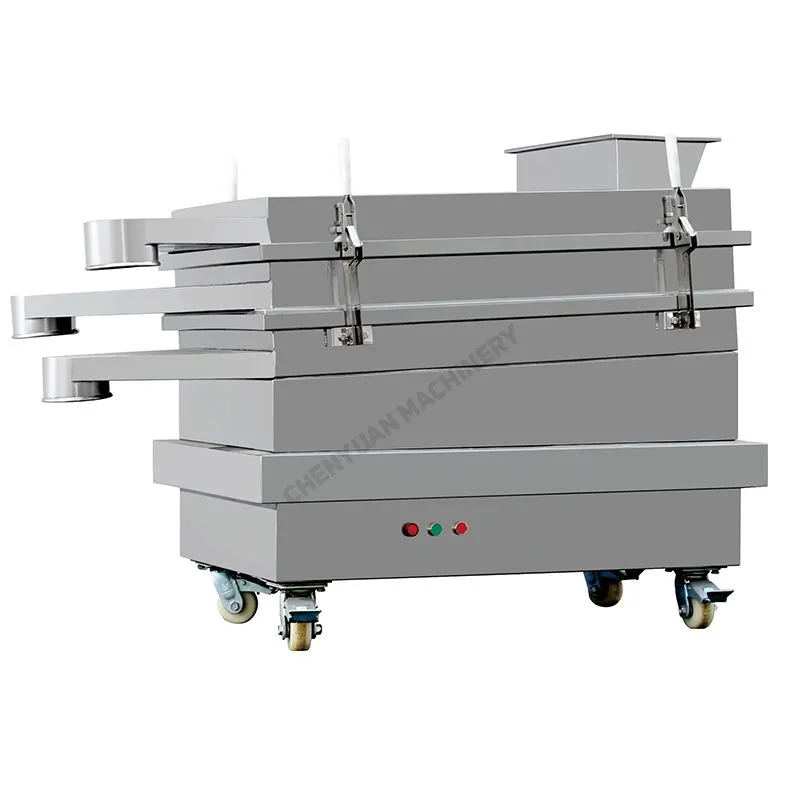
Application Scenarios for Vibrating Sieves
Vibrating sieves are utilized across a diverse array of industries, fundamentally due to their efficiency in powder handling. These sectors include:
- Pharmaceuticals: Ensuring that active pharmaceutical ingredients (APIs) maintain high purity levels by effectively removing contaminants.
- Food Processing: Grains, spices, and other foodstuffs require stringent quality control, where vibrating sieves remove impurities and achieve uniform particle sizes.
- Chemical Manufacturing: Basic chemicals and powders often need precise separations to meet stringent compliances.
Each of these fields depends on the reliability and accuracy of vibrating sieves, where any lapse can lead to significant cost implications.
Key Advantages of Vibrating Sieves
The importance of vibrating sieves cannot be understated. Here are several measured benefits that underscore their relevance in industry:
- Increased Efficiency: Utilizing vibrating mechanisms allows for a separation speed that can be 45% faster than traditional methods, significantly shortening processing times.
- Minimal Contamination: By applying precise mesh sizes tailored to the specific application, contamination levels in the final product can be reduced by up to 98%.
- Cost-Effectiveness: Efficient sieving translates into reduced labor costs, with manufacturing processes observing a delight constant yield and reduced downtime by an estimated 30%.
These advantages not only improve operational efficiencies but also ensure compliance with industry standards, enhancing a company’s market position.
Next Steps: How to Choose the Right Type of Vibrating Sieve for Your Process?
Choosing the right vibrating sieve can be daunting. It’s essential to consider factors such as mesh size, material type, and the specific requirements of your operation. Manufacturers, including Jiangyin Chenyuan Machinery, provide user guides to assist in the selection process.
For optimal results, it is advisable to engage in dialogue with equipment suppliers, and thoroughly read user guides or operational manuals. This takes the guesswork out of the decision and ensures the correct vibrating sieve is implemented, tailored for your specific needs.
FAQ
Q: What factors should I consider when selecting a vibrating sieve? A: Key factors include mesh size, material characteristics, production volume requirements, and intended applications.
Q: How often do vibrating sieves require maintenance? A: Regular maintenance should be performed every six months, or more frequently depending on usage and environmental factors.
Q: Where can I find reliable vibrating sieves? A: Jiangyin Chenyuan Machinery is a reputable provider of vibrating sieves, offering a range of models suitable for various industrial applications.
In conclusion, the evolving landscape of material processing has made the Vibrating Sieve for Powder a cornerstone of operational excellence across multiple sectors. For those looking to improve their separation processes and ensure product integrity, engaging with knowledgeable suppliers like Jiangyin Chenyuan Machinery can offer invaluable insights and guidance.


Thanks for sharing such valuable information. The detailed explanation makes this topic much easier to understand. Safety valve Supplier
ReplyDelete