What are the typical applications of vibrating sieves in food, chemical, and pharmaceutical industries?
The vibrating sieve for powder represents a significant advancement in separation technology. It addresses critical pain points faced by industries such as food, pharmaceuticals, and chemicals, where maintaining purity and achieving precise particle size is paramount. Traditionally, these industries have struggled with issues related to contamination, inefficiency in separating desired powders, and ensuring consistent product quality. The vibrating sieve offers solutions that not only promise improved efficiency but also ensure compliance with important regulatory standards. By integrating state-of-the-art technology, businesses can expect a remarkable increase in operational efficiency, helping them stay competitive in a demanding market.
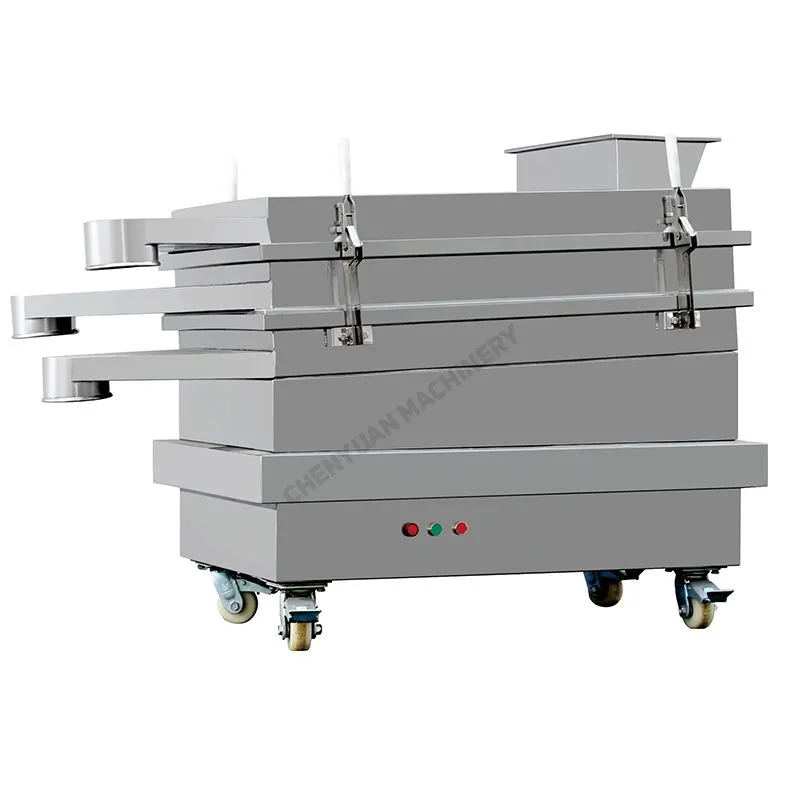
Definition of Vibrating Sieve
A vibrating sieve, commonly used in powder processing, is a piece of equipment designed to separate materials based on size. It utilizes a combination of mechanical vibration and gravity to efficiently separate powders and granulates into distinct fractions. The sieve's functionality hinges on its ability to pass materials through mesh screens of various sizes, capitalizing on the vibrational energy to accelerate the separation process.
Industry Terms to Know:
- Mesh Size: Refers to the number of openings per linear inch in the sieve; smaller mesh sizes are used for finer powders.
- Separation Efficiency: A measure of how effectively the sieve sorts materials, often expressed as a percentage.
- Flow Rate: The quantity of material processed through the sieve per unit of time, measured in kilograms per hour (kg/h).
Application Scenarios for Vibrating Sieves
The versatility of vibrating sieves allows for widespread application across multiple industries:
Food Industry: In the food sector, vibrating sieves are essential for ensuring ingredient quality. They are used for separating flour, sugar, and spices, where they effectively remove lumps and contaminants. For example, in flour processing, separating granules efficiently can yield a higher quality product that leads to less waste.
Pharmaceutical Industry: Here, precision is crucial. Vibrating sieves are used during the creation of formulations, assisting in the uniform distribution of active ingredients and ensuring that tablets meet strict regulatory standards for size and purity. Studies suggest that a properly calibrated vibrating sieve can increase product throughput by 25% while improving quality metrics.
Chemical Industry: Chemical manufacturers utilize vibrating sieves to separate catalytic materials and intermediates. For example, in the production of base chemicals, these sieves enhance the separation of fine powders, leading to consistent product quality and reduced processing times.
Brief Description of Advantages
Enhanced Separation Efficiency: Vibrating sieves can achieve separation efficiencies exceeding 95%, significantly reducing the potential for contamination and improving product quality.
Versatile Applications: Their adaptability to various industrial processes makes vibrating sieves an essential tool for manufacturers looking to streamline operations across multiple stages of production.
Reduced Operational Costs: With higher throughput and lower waste generation, businesses experience a decrease in operational costs, ultimately boosting profit margins.
User-Friendly: Most designs allow for straightforward setup and operation, with many systems featuring adjustable settings to fine-tune the vibration intensity as per material requirements.
Next Steps for Implementation
For those interested in integrating vibrating sieves into their operations, it’s essential to consult the user guide specific to your brand model. Jiangyin Chenyuan Machinery, a leader in this field, offers extensive resources and expert support to ensure optimal setup and functioning of your vibrating sieve.
FAQ
What is the lifespan of a vibrating sieve?
The lifespan of a high-quality vibrating sieve typically ranges from 10 to 15 years, depending on usage and maintenance practices.
Can a vibrating sieve be used for wet materials?
Yes, vibrating sieves can accommodate wet and dry materials, although modifications may be necessary for optimal efficiency.
How do I maintain my vibrating sieve?
Regular cleaning, inspection of mesh integrity, and checking vibration settings are critical to maintaining optimal performance.
For further details or to trial equipment from Jiangyin Chenyuan Machinery, visit their website or contact their customer service team. Experience enhanced efficiency and product quality by incorporating vibrating sieves into your operations today!


Comments
Post a Comment