Which industrial mixer is suitable for food and pharmaceutical applications?
Choosing the right industrial mixer is crucial for both food and pharmaceutical applications. You must consider factors such as process efficiency, compliance with safety regulations, and product consistency. In this article, we will explore the various types of industrial mixers available, their specific applications, and which mixer may best suit your needs in the food and pharmaceutical sectors.
1. Understanding Industrial Mixers
Industrial mixers are apparatus used to blend different substances to achieve a uniform mixture. This is critical in food and pharmaceutical production where uniformity affects quality and compliance. Understanding the role of mixers can help streamline production processes and ensure product quality.
2. Types of Industrial Mixers
2.1. Helical Mixers
Helical mixers provide high shear and are ideal for viscous products.
2.2. Ribbon Mixers
Ribbon mixers are often used for powders and are excellent for bulk materials, ensuring thorough blending with minimal product degradation.
2.3. Paddle Mixers
Paddle mixers are suitable for a variety of applications and excel in mixing large volumes of material while maintaining product integrity.
2.4. Planetary Mixers
Planetary mixers are versatile and common in food production, particularly for dough and other semi-solid products.
2.5. Vacuum Mixers
These are specifically designed to remove air from the material being mixed, beneficial in pharmaceutical applications for sensitive compounds.
3. Key Factors for Food and Pharmaceutical Applications
3.1. Compliance and Safety Regulations
Compliance with regulations such as FDA guidelines ensures product safety and quality. It’s essential to select mixers made with food-grade materials that are easy to clean and sanitize.
3.2. Material Compatibility
Mixers must be compatible with the ingredients being processed to prevent contamination and ensure effective mixing.
3.3. Mixing Efficiency
Efficiency can significantly impact production timelines. High-performance mixers can provide consistent results and reduce mixing times.
3.4. Scale and Capacity
Understanding production needs will help in selecting the right size and capacity for the mixer, ensuring operational efficiency.
4. Comparative Analysis of Industrial Mixers
| Type of Mixer | Best For | Efficiency Rating | Cleaning and Maintenance |
|---|---|---|---|
| Helical Mixer | Viscous products | High | Complex |
| Ribbon Mixer | Powders | Medium | Moderate |
| Paddle Mixer | Bulk materials | High | Easy |
| Planetary Mixer | Dough and semi-solids | High | Moderate |
| Vacuum Mixer | Sensitive compounds | Very High | Complex |
5. Selecting the Right Mixer for Your Needs
5.1. Assessing Your Product Requirements
Consider factors such as viscosity, ingredient types, and final product characteristics before selecting a mixer. This ensures an optimal mixing process and product quality.
5.2. Steps to Select an Industrial Mixer
- Identify the physical properties of your ingredients.
- Determine the mixing requirements based on batch size.
- Evaluate mixer types based on efficiency and product integrity.
- Consult with manufacturers or experts for recommendations specific to your application.
5.3. Conclusion
The choice of industrial mixer for food and pharmaceutical applications is essential for achieving the desired product quality and compliance with safety standards. With a clear understanding of the different mixer types and their applications, manufacturers can make informed decisions that enhance their production capabilities.
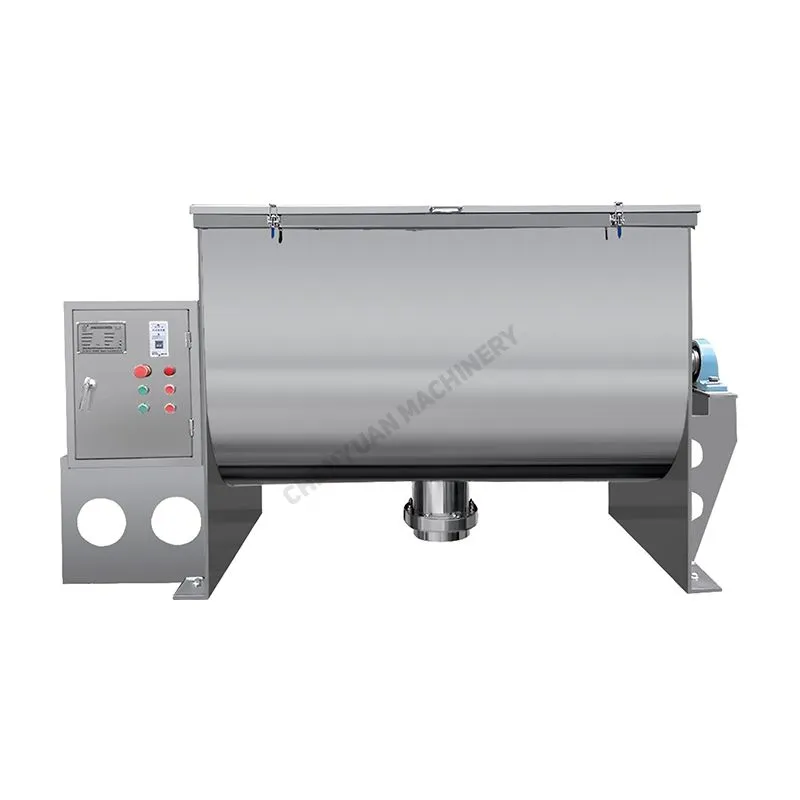
About Jiangyin Chenyuan Machinery
Jiangyin Chenyuan Machinery is dedicated to providing high-quality industrial mixers tailored for the food and pharmaceutical industries. Our commitment to innovation ensures that you receive the best solutions for your mixing needs.


This post explains the subject clearly without making it unnecessarily complicated. Great resource for industry professionals. Glue Free Paper Straw
ReplyDeleteThe availability of dedicated PLA machinery makes it easier for manufacturers to establish specialized sustainable straw production. PLA Straw Making Machines
ReplyDelete